Magnesium: What It Does, Food Sources, Benefits and Supplement Risks
Magnesium supports many body functions, but evidence for added health benefits varies. Learn about food sources, intake, absorption and supplement safety.

Magnesium is essential to the body, but claims about what extra magnesium can do need careful reading. It helps nerves and muscles work, supports bone structure and is involved in hundreds of enzyme systems. Research also links magnesium intake or blood levels with outcomes such as blood pressure, diabetes risk, sleep and mood. Those findings don’t all show that taking a supplement will prevent or treat a health condition.

An adult body contains about 25 grams of magnesium. Roughly half is stored in bones, with most of the rest in muscles and other soft tissues. Less than 1% circulates in the blood. The kidneys help keep blood levels within a narrow range by adjusting how much magnesium the body retains or excretes.
That distribution matters when interpreting blood tests: a result within the usual range does not necessarily measure the body’s total magnesium stores. It also helps explain why food is an unlikely source of excessive magnesium for people with healthy kidney function, while high amounts from supplements or medicines can cause problems.
What magnesium does in the body
Magnesium contributes to normal blood pressure and bone structure. It helps regulate calcium and potassium movement across cell membranes, supporting nerve signals, muscle contraction and a steady heartbeat. The mineral also plays a part in energy production and the formation of DNA and RNA. More than 300 enzyme systems rely on magnesium to help biochemical reactions take place.
These roles make magnesium necessary for normal function. They don’t mean that raising magnesium intake above an adequate level will improve every process or prevent disease. The strength of evidence depends on the health outcome and the type of research.
What research suggests about health

Heart health and blood pressure
A 2017 meta-analysis combined 11 studies and found that higher magnesium levels in the blood were associated with lower rates of heart disease and high blood pressure. For each 0.1 millimoles per liter increase in circulating magnesium, the analysis found a 4% lower incidence of hypertension. This association doesn’t establish that magnesium itself caused the difference, and researchers have not settled on a blood level that protects heart health.
Some studies of supplements report lower blood pressure, with effects noted among people with insulin resistance, prediabetes or other risk factors. That evidence may be relevant to research on magnesium, but it doesn’t establish supplements as a substitute for care or as a way to prevent heart disease.
Bones and muscles
Magnesium works alongside calcium in bone health. In a 2017 study of more than 150,000 men and women ages 39 to 72, higher dietary magnesium intake was associated with modestly higher bone density and grip strength. The differences were similar in size to a year or more of age-related bone and muscle loss.
The study measured diet and health outcomes at one point in time. It therefore can’t show that magnesium intake produced the differences, or that more magnesium prevents osteoporosis or fractures. The findings suggest a possible connection with musculoskeletal health as people age, while leaving cause and effect unresolved.
Type 2 diabetes
A meta-analysis published in 2017 found an association between higher blood magnesium and lower risk of type 2 diabetes. A separate 2016 meta-analysis examined 25 studies involving more than half a million people, including more than 25,000 with type 2 diabetes. It reported that each additional 100 milligrams of magnesium from food per day was associated with an 8% to 13% lower risk of developing the condition.
These results describe associations across groups. They don’t show that an individual can prevent diabetes by adding a particular amount of magnesium to their diet, and they don’t establish a target blood level. Diet and health are influenced by many factors, which makes results from population studies difficult to translate into a personal treatment plan.
Sleep

A 2021 systematic review and meta-analysis pooled three randomized trials of oral magnesium for insomnia in adults older than 55. Participants taking magnesium fell asleep about 17 minutes sooner than those taking a placebo and slept an average of 16 minutes longer.
The trials were limited, so the findings offer preliminary evidence rather than a firm answer about whether magnesium improves sleep. A small 1998 study of older adults with insomnia also reported reduced restless leg symptoms and improved sleep efficiency after participants received 300 milligrams of elemental magnesium daily for four to six weeks. The small study can’t establish how well those results apply to other people.
Sleep problems can have many causes. Anyone considering a supplement for persistent insomnia or restless legs can discuss possible causes and options with a health care professional, especially if they use medicines or have kidney problems.
Migraine
Researchers have studied magnesium in relation to migraine. One proposed explanation is that low magnesium may contribute to changes in brain activity, blood vessel narrowing and the release of chemical messengers involved in migraine. The mechanisms remain under study, and responses to magnesium vary.

Some migraine studies have examined amounts above the adult supplemental upper limit of 350 milligrams per day. Higher amounts can cause diarrhea and abdominal pain, so anyone considering magnesium for migraine prevention should discuss the amount and form with a health care professional rather than taking large doses independently.
Mood
A 2017 randomized crossover study enrolled 126 adults receiving outpatient primary care for mild-to-moderate depression. Participants took 248 milligrams of magnesium per day for six weeks and had a separate six-week period without treatment; the order differed between the two groups. Symptoms improved on a questionnaire during the magnesium period, and 61% of participants said they would continue using it.
This study suggests a possible benefit, but it doesn’t establish magnesium as a treatment for depression. People experiencing depression can speak with a health care professional about care that fits their circumstances.
Daily needs and food sources

Recommended dietary allowances vary with age, sex and life stage. The figures below give the daily amounts listed in the source article:
- Birth to 6 months: 30 milligrams; 7 to 12 months: 75 milligrams
- Ages 1 to 3: 80 milligrams; ages 4 to 8: 130 milligrams
- Ages 9 to 13: 240 milligrams
- Boys ages 14 to 18: 410 milligrams; girls ages 14 to 18: 360 milligrams
- Men age 19 and older: 400 to 420 milligrams; women age 19 and older: 310 to 320 milligrams
- Pregnant teens: 400 milligrams; pregnant women: 350 to 360 milligrams
- Breastfeeding teens: 360 milligrams; breastfeeding women: 310 to 320 milligrams
These recommended amounts cover magnesium from food and supplements together. In contrast, the adult upper limit of 350 milligrams per day applies to magnesium from supplements and medicines, not magnesium naturally present in food. The limit reflects digestive side effects and is not the amount the body needs. Food is generally the main source; supplements may fill a dietary gap.
Magnesium-rich foods include nuts and seeds, especially almonds, cashews, peanuts and nut butters; spinach; beans and legumes such as black beans and edamame; dark chocolate with at least 70% cacao or cocoa solids; avocado; potatoes; whole grains such as quinoa and whole wheat; tempeh; and bananas. Cooked spinach contains more magnesium per serving than raw spinach because cooking reduces its volume.
For people with healthy kidneys, magnesium from food has not been shown to cause harm, and the kidneys can remove excess. Reduced kidney function changes that picture: magnesium may accumulate when the body cannot clear it well. People with impaired kidney function should talk with a health care professional before using magnesium supplements.
Low magnesium: intake, testing and possible causes
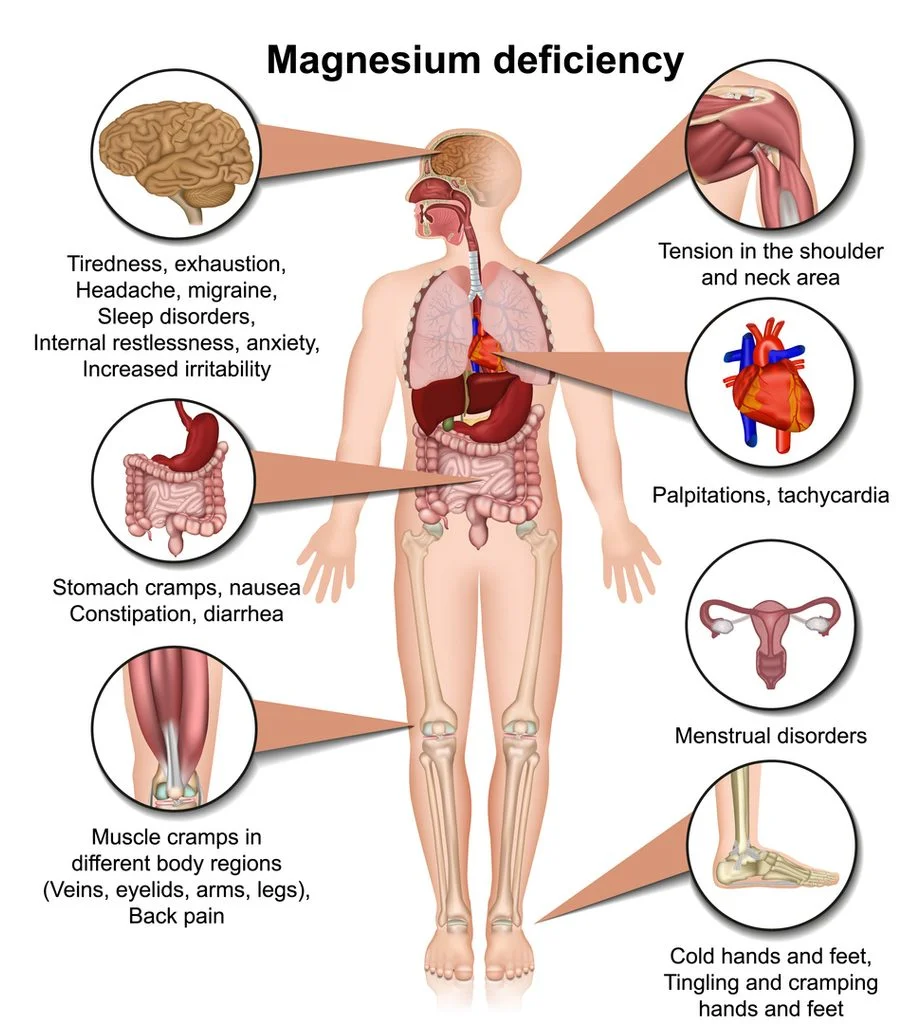
Estimates cited in the source suggest that 10% to 30% of people worldwide have low blood magnesium levels. US dietary survey data found that more than half of adults did not get enough magnesium from food alone: average intake was 344 milligrams a day for men and 270 milligrams for women. About 55% of men and 51% of women fell below estimated requirements. The reported shortfalls were more common among teenage girls, 89% of whom fell short, and men age 71 and older, 75% of whom fell short.
A review published in 2018 argued that less severe magnesium deficiency may be underrecognized. The term refers to a possible shortage in the body even when blood levels appear normal. Because most magnesium is in bones and soft tissues, and only a small fraction is in blood, a standard blood test does not directly measure total-body stores. The review’s broader claims about magnesium deficiency and chronic disease should be read as the authors’ interpretation of existing evidence, rather than proof that low magnesium causes those conditions.
A standard blood test generally considers 0.75 to 0.95 millimoles per liter to be the normal range; a result below 0.75 is considered deficient. Blood magnesium is still useful, but a result in the usual range cannot by itself confirm that stores elsewhere in the body are adequate. Anyone concerned about a low result or possible symptoms can ask a clinician how to interpret it in light of their health and medicines.
Low magnesium may result from inadequate intake or from problems that reduce absorption or increase loss. Possible contributors include celiac disease or chronic diarrhea, type 2 diabetes, alcohol dependence, older age, and some medicines, including diuretics and proton pump inhibitors. The source also identifies soil mineral depletion or contamination as possible factors affecting the food supply; it doesn’t provide a way to determine whether these are relevant to an individual’s intake.
Early symptoms can include constipation, fatigue, poor appetite and weakness. More severe deficiency may involve muscle contractions, seizures, low calcium or potassium, abnormal heart rhythms, personality changes or numbness in the limbs. These symptoms can have many causes. A health care professional can assess them rather than relying on symptoms alone to identify a magnesium deficiency.
Supplements, side effects and medicine interactions

High magnesium intake is more often a concern with supplements, laxatives or antacids than with food. Large amounts can cause diarrhea, nausea and abdominal cramps. Unabsorbed magnesium salts draw water into the intestine and speed bowel movements, which is also why some magnesium products are used for constipation. Carbonate, chloride, gluconate and oxide are among the forms associated with diarrhea.
The adult upper limit for magnesium from supplements and medicines is 350 milligrams per day. Limits for children are 65 milligrams for ages 1 to 3, 110 milligrams for ages 4 to 8, and 350 milligrams for ages 9 to 18. No upper limit has been established for infants younger than 12 months. The limit applies to elemental magnesium and is separate from magnesium in food.
Labels can be confusing because the weight of a magnesium compound is not the same as the amount of elemental magnesium it provides. Magnesium oxide is about 60% magnesium by weight, while magnesium glycinate is about 14%. A product described as containing 500 milligrams of magnesium glycinate, for example, would provide about 70 milligrams of elemental magnesium. Check the Supplement Facts panel for the elemental amount when comparing products or considering research doses.
Some sleep trials used 320 to 729 milligrams of elemental magnesium daily, and some migraine studies examined higher amounts. These amounts exceed the usual adult upper limit for supplements. Study doses aren’t automatically suitable for general use; a clinician or pharmacist can help review a proposed supplement, particularly when it exceeds the limit.
Very high magnesium levels in the blood, known as hypermagnesemia, can be dangerous. The risk rises when kidney function is impaired. Early signs of excessive intake can include low blood pressure, facial flushing, fatigue, depression or difficulty urinating; severe toxicity may cause muscle weakness, trouble breathing and irregular heartbeat. In rare cases, it can lead to cardiac arrest. Large amounts of magnesium-containing laxatives and antacids can contribute to toxicity.
Magnesium supplements can also affect some medicines. The source identifies bisphosphonates for bone loss, certain antibiotics, diuretics and proton pump inhibitors as examples. Depending on the combination, magnesium may reduce medicine absorption or effectiveness, or contribute to magnesium loss. A pharmacist or clinician can check whether a supplement could interact with a person’s medicines.
Different forms of magnesium
Magnesium products use different compounds, which can affect how much elemental magnesium they contain, how they’re absorbed and their effects on digestion. Evidence for specific health uses is uneven, and a form marketed for a particular benefit is not necessarily proven to deliver it.
- Malate: Magnesium bound to malic acid. It is sometimes used in products marketed for fatigue or fibromyalgia, but effectiveness for those conditions remains uncertain.
- Glycinate: Magnesium bound to glycine. It is often chosen by people seeking a form that may be gentler on digestion or for sleep, but claims about calmness and sleep should be weighed against limited evidence.
- Taurate: Magnesium bound to taurine. Possible effects on blood pressure or blood sugar have mainly been observed in animal research, so human evidence is still needed.
- Oxide: A common form, also found in milk of magnesia. It is less readily absorbed than some other forms and may cause diarrhea, particularly at higher amounts.
- Citrate: Magnesium bound to citric acid. It can have a laxative effect and is sometimes used for constipation; it is also used in some migraine research.
- Gluconate: Used to treat magnesium deficiency. Comparisons of absorption cited in the source were based on animal research, so they don’t establish its comparative effects in people.
- Chloride: A magnesium salt that is described as well absorbed and is used in some products for heartburn, constipation or magnesium deficiency.
- Lactate: Used to fortify some foods and drinks and also sold as a supplement. It may be gentler on the digestive tract for some people.
- Threonate: Studied for possible effects on brain magnesium, memory and cognition. Much of the research is preclinical, and human evidence remains limited.
Food preparation and absorption

The body typically absorbs around 30% to 40% of dietary magnesium. Absorption varies with the meal, food preparation and other factors. Phytic acid, a naturally occurring compound in some nuts, seeds, beans and grains, can reduce absorption of magnesium and some other minerals. The amount in a food can vary, so the effect is not easy to predict from a food name alone.
Preparation can affect how much magnesium stays in a meal. Boiling vegetables can move some magnesium into the cooking water; steaming or sautéing, or using the cooking liquid, can help retain it. Soaking, sprouting or fermenting grains and legumes can reduce phytic acid. These steps are options for preparing foods, not a requirement for eating a nutritious diet.
High-dose calcium supplements can compete with magnesium for absorption, and high-dose zinc supplements may also interfere. The source suggests taking high-dose calcium supplements at least two hours apart from magnesium-rich meals or supplements. People who use mineral supplements can ask a pharmacist about timing and interactions. Vitamin D supports magnesium absorption in the gut, and smoking is associated with lower magnesium levels.
Food first, with care around supplements

Including magnesium-rich foods across meals is a practical way to support intake. Nuts or seeds can be added to a grain bowl; spinach can go into a stir-fry; beans, quinoa, avocado, whole grains and potatoes can all contribute. The source’s recipe examples—blueberry walnut pancakes, citrus salad with spinach and lentils, and quinoa chickpea stew—combine several of these foods.
Blueberry Walnut Pancakes

Walnuts, bananas, oats and plant-based milk contribute magnesium. Blueberries or other fruit can add flavor and variety.
Citrus Salad in a Jar

Spinach, cashews, lentils, avocado and sunflower seeds make this salad a source of magnesium-rich ingredients.
Warmly Spiced Quinoa Chickpea Stew

Quinoa and chickpeas form the base, with dried figs and sautéed fennel adding sweetness and flavor.
A supplement may be relevant for someone whose diet consistently falls short or whose health or medicines affect magnesium levels. The right choice depends on the amount of elemental magnesium, kidney function, other medicines and the reason for taking it. A normal blood result does not capture all body stores, but that limitation alone is not a reason to start a supplement. A clinician or pharmacist can help interpret test results and assess whether a supplement is appropriate.
Magnesium is necessary, and a varied diet with beans, whole grains, nuts, seeds and vegetables can help provide it. Research links magnesium with several important health outcomes, but those links vary in strength and don’t establish supplements as treatment or prevention. The clearest practical point is to consider food intake and personal health together, and to get professional guidance before using high supplemental amounts or magnesium-containing medicines.