Experimental Peptides: What the Evidence Says About Safety, Benefits and Patents
Experimental peptides have drawn attention despite limited human research. Here’s what natural origins, treatment claims and patents do—and don’t—tell us.

Experimental peptides are being promoted for aging, injuries and other health concerns, but the evidence behind many of these claims remains thin. The key question for consumers is not whether a peptide sounds natural or promising in a lab. It’s whether well-designed studies show that it helps people safely.
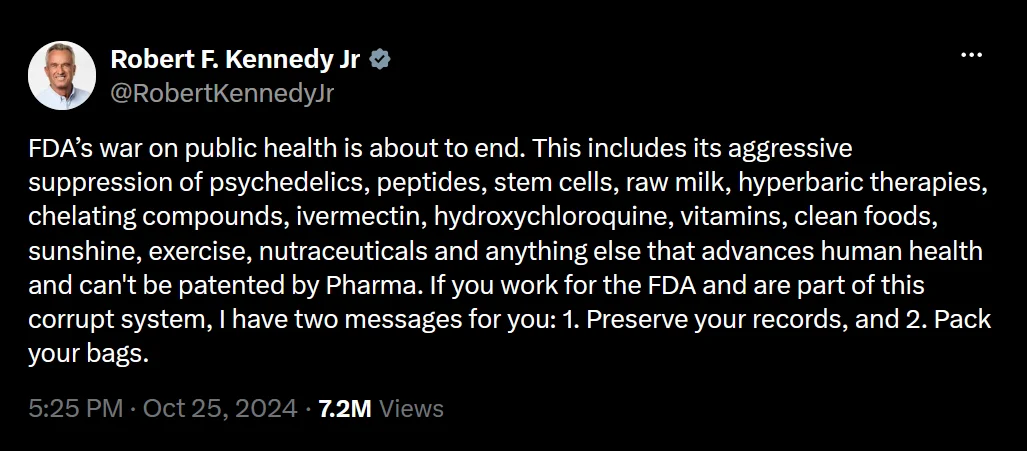
That distinction matters as a proposal to let licensed pharmacies sell certain unapproved peptides has drawn debate. Scientists who reviewed the substances said they had not been adequately assessed in clinical trials. An advisory panel later supported easing some restrictions. The disagreement highlights a practical concern: wider access could outpace the research needed to understand benefits, risks and appropriate use.
Peptides can be drugs
Some promoters say peptides aren’t drugs. The term “peptide” describes a type of molecule: a short chain made from the same building blocks as proteins. It says nothing by itself about what the substance does or whether it is safe.
When a substance is used to treat or prevent illness, or to change how the body functions, it can be a drug. Insulin is one familiar example. The body makes insulin, but injected insulin is a medicine used to regulate blood sugar. A substance’s natural origin doesn’t change its effects or settle how it should be assessed.
That point is relevant to claims that peptides can adjust cortisol, improve circulation or affect other body processes. Such claims describe potential medical effects. They call for evidence about what happens in people, not a change in terminology.
Natural does not mean harmless
Another sales pitch presents peptides as safe because they occur in nature or are made by the body. Neither claim is a safety test. Natural substances can be toxic, and even established medicines can cause harm, particularly when used inappropriately or by people with certain health conditions.
BPC-157 illustrates why the “made by the body” claim is unsettled. The experimental peptide was developed after researchers isolated a substance they described as a “body protective compound” from stomach juices. But researchers have not found BPC-157 in the human genome, according to Stanford peptide scientist Katrin Svensson. Research in Taiwan has raised a different possibility: that stomach microbes produce it. The available information does not establish that people naturally make it.
Safety assessment requires more than identifying a substance in nature. Placebo-controlled clinical trials can help researchers compare outcomes and detect side effects. Some harms may not be obvious right away; studies may also reveal whether a health condition makes an adverse effect more serious. Evidence about benefits and harms together helps determine whether a treatment’s potential value outweighs its risks.
Svensson’s lab studies peptides, including candidates she hopes to develop as medicines. She has expressed interest in their potential while emphasizing the need to show that they are not harmful. That is the central gap for BPC-157 and five other experimental peptides under consideration for looser restrictions: they have not gone through high-quality clinical trials and are not approved as medicines.
Treatment claims run ahead of human research
Promoters have attributed a wide range of benefits to experimental peptides, including relief from reflux, treatment for neurologic disorders and recovery from muscle injuries. Claims have also covered COVID-19 and inflammatory bowel disease. Yet the human evidence described in the source is sparse, and the studies available have significant limitations.
A short report from 2005 described a small trial of BPC-157 for inflammatory bowel disease, but it left out important details about how the research was carried out. Scientists reviewing the report judged it inadequate for establishing the treatment’s effects.
In another small study, 14 of 16 people reported less knee pain after BPC-157. Without a comparison group, researchers cannot tell whether the peptide caused the improvement. Symptoms might have eased on their own, or other factors could have contributed.
A 2025 review of research on BPC-157 for musculoskeletal injuries advised caution because evidence was lacking. Flynn McGuire, a physical rehabilitation doctor at the University of Utah and an author of the review, has said he won’t prescribe it until better studies are available. Accounts of dramatic recoveries may feel persuasive, but anecdotes cannot reliably separate a treatment effect from natural recovery, other care or expectations.
Laboratory research can help scientists understand how a peptide might work and decide what to study next. For example, a lab finding that a peptide encourages blood vessel growth does not show that it will safely treat a person. Researchers still need to test how it behaves in the body, whether it affects other tissues, and whether a potential benefit comes with serious downsides. Many substances that look promising in early experiments do not succeed in clinical trials.
Patent myths obscure how drug development works
A common claim is that pharmaceutical companies ignore peptides because natural substances cannot be patented. That reasoning leaves out the ways a drug can be changed or formulated. Hundreds of peptide patents appear in the U.S. Patent and Trademark Office database, and an early formulation of BPC-157 has been offered for sale as a patent.
Jacob Sherkow, a biotechnology law professor at the University of Illinois Urbana-Champaign, explains that a natural substance itself may not qualify for a patent, while a modified version, a delivery method or a more stable formulation may. Patents can therefore apply to peptide products and related technologies.
Peptide patents can carry substantial commercial value. GLP-1 peptides, which form the basis of medicines such as Ozempic, have become the subject of patent disputes between drugmakers. The market for these medicines is projected to reach $190 billion within the next decade, according to Morgan Stanley.
That does not mean companies will fund trials for every peptide promoted online. Clinical trials can cost millions of dollars. Companies weigh the evidence for a candidate, its prospects for approval and whether it might offer an advantage over treatments already available. Early experiments may also have discouraged investment in some candidates.
Pinchas Cohen, a gerontology scientist at the University of Southern California, said investors withdrew from potential trials of MOTS-c, a peptide he helped discover, in part because they worried it would compete with GLP-1 medicines. Wider sales of unapproved peptides could further reduce the incentive to fund studies, since products might reach consumers without the evidence and review associated with approval. The pharmaceutical trade organization PhRMA has warned that easing restrictions could weaken manufacturers’ incentive to undertake that work.
Better access to care needs better evidence
There is a real problem behind the appeal of peptide claims: many people struggle with health care costs, including prescription prices. In a KFF poll cited in the source, six in 10 U.S. adults said they worried about affording prescription drugs, and four in 10 said they had skipped doses or taken other measures because of cost. The United States also spends more per person on health care than other nations while life expectancy ranks below that of other wealthy countries.
Researchers have proposed ways to address cost and health, including reducing drug monopolies and improving access to healthy food. Selling treatments before good studies establish their benefits and risks does not fill those gaps. For anyone considering an experimental peptide, the useful questions are what human studies have been done, how they were designed, and what is known about side effects. A doctor or pharmacist can help put those questions in context, especially when a person takes other medicines or has an ongoing health condition.