Why Some U.S. Cancer Patients Have Sought Treatment in China
A patient’s search for a lung cancer drug highlights China’s growing role in biotech and the access, evidence and safety questions patients face.

For some people with advanced cancer, the search for a treatment that matches their tumor can cross national borders. Debbie Doppelt, a 60-year-old New York jeweler, traveled to China to obtain sunvozertinib after her lung cancer spread to her brain and the options available to her in the United States did not fit her needs. Her experience reflects both the growing reach of Chinese drug development and the difficult decisions patients face when a promising medicine is available abroad before it is accessible at home.
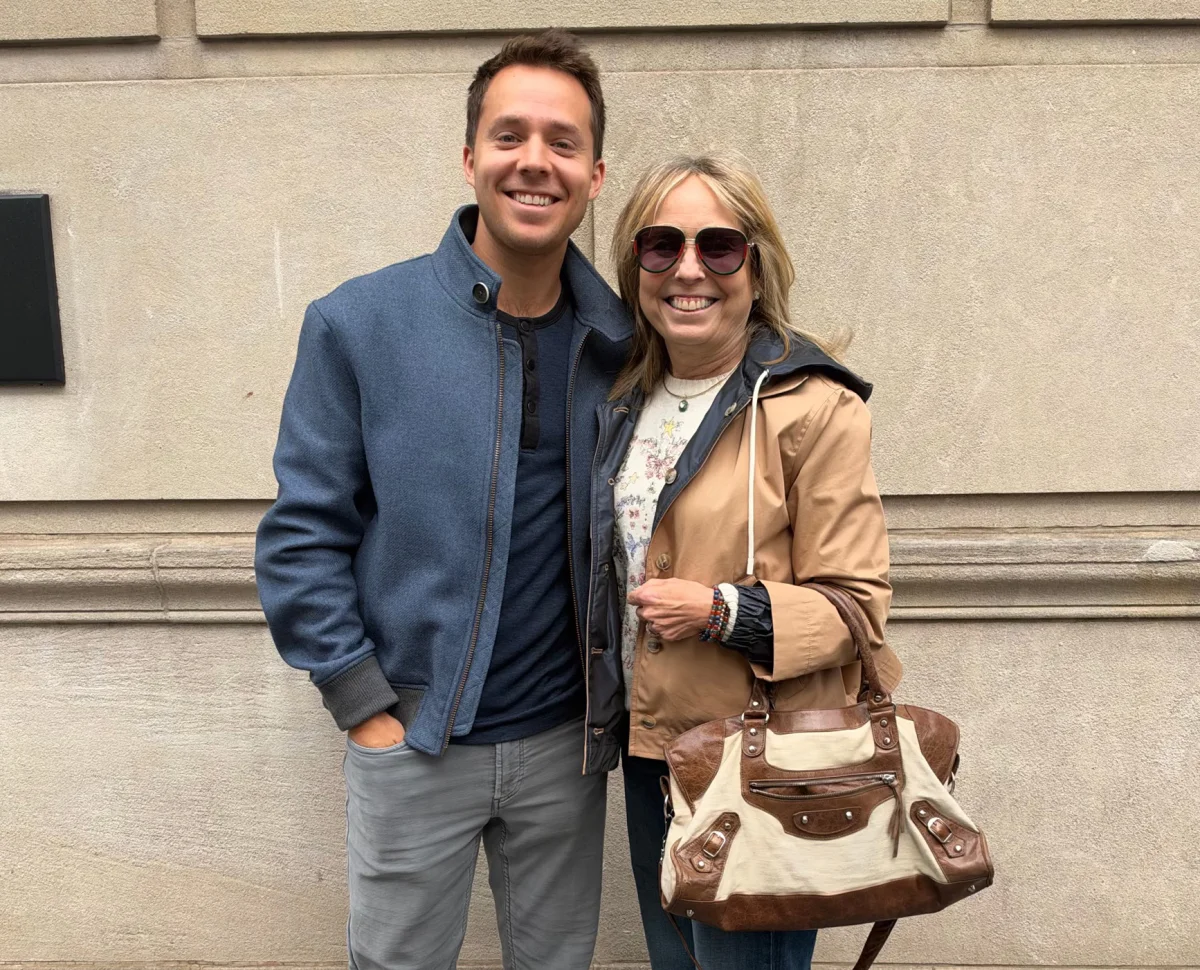
Doppelt was diagnosed in 2023 with an uncommon form of lung cancer that often affects people who have never smoked. Chemotherapy, immunotherapy and surgery held the disease back for a time. By December 2024, scans showed 10 small tumors in her brain.
Her son, Max, helped coordinate her care. He worried about the side effects of amivantamab, a medicine approved in the United States that targets the mutation driving her cancer. Doctors he consulted also questioned whether it would reach tumors in the brain. Doppelt tried to join a study of another targeted drug, zipalertinib, at Memorial Sloan Kettering Cancer Center. Slight scarring in her lungs made her ineligible.
Sunvozertinib appeared to be another possibility. Developed by Shanghai-based Dizal Pharmaceutical, the drug had been approved in China in 2023 and was being studied in the United States. But the U.S. studies available to Doppelt were late-stage trials in which half of participants received chemotherapy alone. Given her history, she did not consider that a tolerable risk.
In January 2025, a doctor mentioned that the medicine could be bought at a pharmacy in China. Within hours, the family began contacting friends and relatives. A connection in China helped them obtain an initial supply; Max later flew to Shanghai for more. He returned with 26 boxes, which he said cost about $10,000.
“Getting on the plane and bringing the medicine home felt like my life’s purpose,” Max said. He believed the available data showed meaningful activity against cancer in the brain and feared his mother might have less than a year if the drug did not help.
As of mid-October 2025, Max said he knew of at least 30 Americans who had traveled to China for sunvozertinib. He said no doctor or organization was directing patients there; information was spreading through personal contacts. The U.S. Food and Drug Administration licensed the medicine in July 2025, but it was not yet on the U.S. market at the time. On Sept. 1, AstraZeneca agreed with Dizal to distribute it worldwide. The company said it planned to make the drug available in the United States by early 2027.
A changing center of drug development
Sunvozertinib is one example of a broader shift. Patients from the United States, Europe and elsewhere are also traveling to China to seek enrollment in studies of CAR-T cell therapy, an area where China has become a major research center. China accounted for as much as 46% of new drugs tested worldwide in 2025, according to a Goldman Sachs analysis. U.S. pharmaceutical companies are testing therapies there and making large development and marketing agreements with Chinese firms.
China’s biotech growth has changed how companies plan early research. Sam Rasty, who leads the small biotech firm FynderBio, said the country overhauled its biotech sector after its performance in vaccine and medicine development during the COVID-19 pandemic drew criticism. Investment now flows into early clinical work in China and Australia, where key first-in-human studies can begin more quickly than in the United States.
That speed is affecting where U.S. companies test new ideas. Steve Potts, chief executive of Breakthru Medicine, said biotech firms that once discussed early findings at conferences or investor meetings now often keep them private, concerned that a competitor could move faster. At a meeting he attended in May, he said nearly all 60 biotech chief executives planned to run phase 1 studies in Australia, Europe or China. Five or 10 years earlier, most would have expected to run those studies in the United States.
Some U.S. biotech leaders argue that slow and demanding review processes are pushing work overseas. Heidi Overton, nominated to lead the FDA, made that concern central to her Sept. 24 confirmation hearing remarks and pledged to continue Operation TrialBlazer, an effort announced in June to speed some parts of drug development and approval. The initiative draws on processes Australia began in 1991.
Health and Human Services spokesperson Emily Hilliard said the effort aims to make studies and approvals faster so patients feel less pressure to seek care abroad. She also noted that obtaining medicine in another country for personal use can sometimes be legal, while the FDA warns patients about possible safety and quality concerns with treatments outside the U.S. review system. Those concerns are practical: patients may have difficulty confirming a product’s contents, getting reliable information about its use, or arranging follow-up care across borders.
Access and uncertainty for patients
There is no guarantee that a drug will help a particular person, even when it targets a mutation found in their cancer. Max said sunvozertinib seemed to help about half of the people who took it, based on the patients he knew. A 70-year-old woman he had assisted obtained a six-month supply from China, but after three months she learned the treatment was not working and her cancer had spread.
Doppelt’s experience has been more encouraging. Around 19 months after starting sunvozertinib, her cancer remained mostly controlled, with help from several radiation treatments and changes to her medication. She has continued working in the diamond business she runs with her husband and said she feels grateful for her family and community. Her course is a single person’s experience; it cannot show how likely the drug is to help other patients or how long its benefits may last.
Max has turned his family’s search into a tool for finding studies. He left his computer engineering job about a year ago and started a company that uses artificial intelligence to compare research and drug company information with a patient’s medical records. The service is intended to help identify studies that may fit a person’s situation. About 300 people have used it so far, all of them lung cancer patients, and he does not charge them.
His effort sits alongside other software designed to help hospitals and clinics connect patients with studies. About 7% of U.S. cancer patients currently take part in clinical trials, according to research published in the Journal of Clinical Oncology. Kent Thoelke, chief executive of Paradigm Health, which offers software to support enrollment, argues that better matching could help patients find options while supporting research in the United States.
For Doppelt, the search is ongoing. Max recently reviewed possible studies through his app, including one involving firmonertinib, a drug approved in China in 2021 and under study in the United States and other countries. CAR-T therapy is another possibility. A University of Colorado team is developing an approach intended to strengthen immune activity against mutations like the one behind Doppelt’s cancer.
Kyle Concannon, a leader of that research team, said newer tools for measuring toxicity and how a treatment spreads through tissue can improve safety assessment, but also add time, cost and uncertainty to development. He sees a difficult balance: identifying potential harms matters, while people with aggressive diseases may have few options as they wait for new treatments to be assessed.
Doppelt’s cancer may eventually find a way around sunvozertinib, Max said. If that happens, her care will depend on what treatments are available then, wherever they were developed. He would prefer to see needed medicines developed in the United States, but opposes shutting out Chinese biotech research. For patients, the immediate questions are more personal: whether a treatment has credible evidence, whether it fits their cancer and health history, and how to weigh uncertain benefits against access and safety concerns. Those questions are best discussed with an oncology team, which can help interpret the evidence and explain available care options.
KFF Health News is a national newsroom that produces reporting on health issues and is one of the core operating programs at KFF, an independent source of health research and journalism. Learn more about KFF.
This article first appeared on KFF Health News and is republished under a Creative Commons Attribution-NonCommercial-NoDerivatives 4.0 International License.