Exoskeletons Move From Industrial Support to Clinical and Consumer Use
Wearable robotic frames are expanding across work, rescue and rehabilitation, though battery limits and early evidence still shape their practical reach.
Wearable exoskeletons are moving into workplaces, rescue operations and rehabilitation, with designs aimed at easing physical effort or helping people move. The technology has roots more than a century old, but cheaper motors, sensors and control systems have helped bring a wider range of devices into use. The evidence so far points to useful support in particular tasks, not a universal boost to strength or endurance.
Seattle Mountain Rescue members have been testing powered devices attached around the hips and legs during backcountry trips in the Pacific Northwest. The trial is intended to assess whether assistance with climbing and carrying loads can help rescuers travel faster or sustain effort longer while searching for people who are stranded. The account describes an evaluation, not a measured result establishing that the devices improve rescue outcomes.
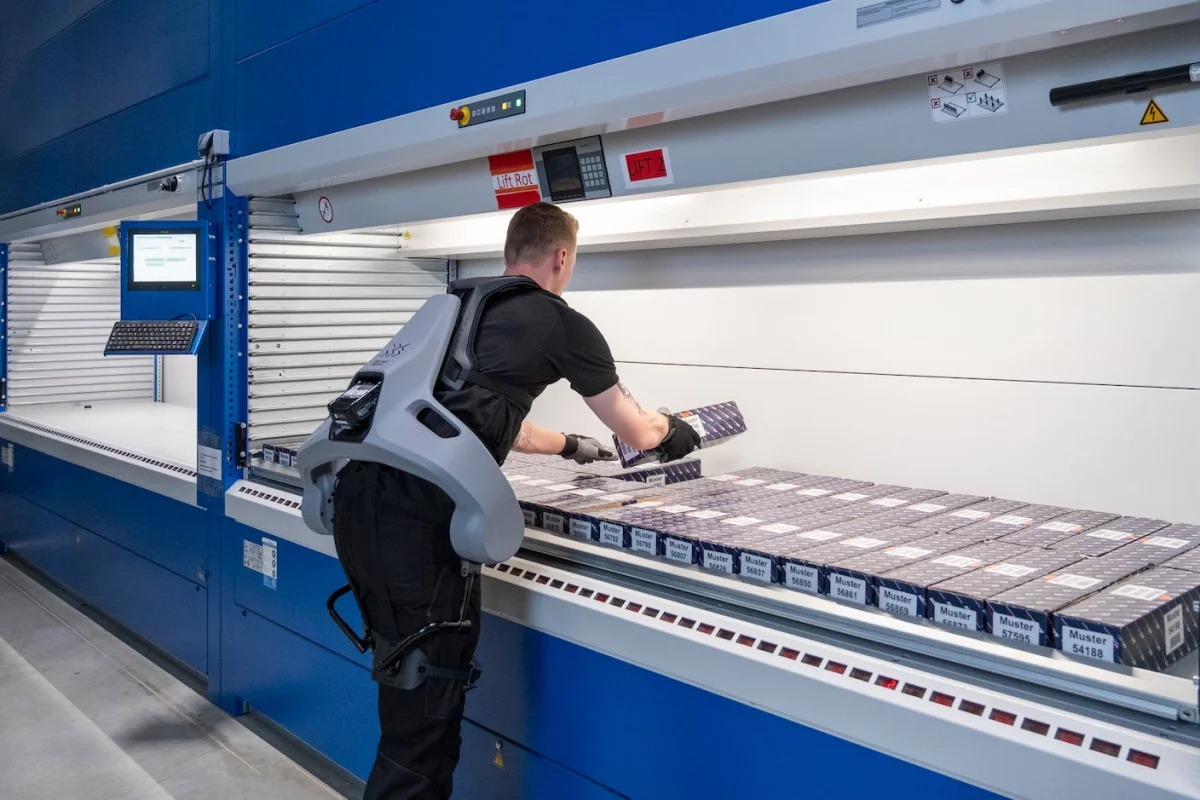
Workplaces have also begun using exoskeletons for strenuous jobs. IKEA has deployed SuitX devices to help warehouse staff handle heavy materials, while Ford, Boeing and Mazda Toyota have adopted the technology on some assembly lines. A Finnish project called ExoPELA assessed whether these devices could reduce muscle load and strain in rescue and firefighting work. Its findings indicated noticeable benefits for users performing certain real-world tasks; the source does not provide a study size or detailed measurements.
Devices for everyday assistance, rehabilitation and exercise are also available. Market estimates cited in the source put the sector at about $500 million today and project that it could double or triple by the mid-2030s. Those figures are forecasts, not evidence that every device will prove effective or suitable for every user.
What the devices do
An exoskeleton is an external mechanical frame worn on part of the body. Powered models use batteries and actuators to generate movement or force that supports the wearer. A frame may attach at the trunk, waist or limbs, depending on the task. Hypershell’s device, for example, fits around the waist and thighs to assist hip movement. SuitX’s workplace equipment attaches at the torso and upper limbs to support the back and shoulders.
Control units coordinate the actuators, using sensors to respond to the wearer and the activity. A device might increase assistance when it detects a movement such as running, or adjust its output as the wearer tires. Many systems are programmed for particular tasks, while newer designs are being developed to adapt to users’ working patterns.
Assistance generally takes three forms. Power augmentation adds force to a person’s movement, as in devices intended to help with lifting or carrying. “Assist-as-needed” systems provide support when a user needs it, while “resist-as-needed” settings can add resistance; both approaches can be used in rehabilitation training. In full robotic control, the device moves part of the body for someone with limited motor function. These approaches can be combined to suit the person and task.
That range matters when interpreting claims about what an exoskeleton can do. A device designed to reduce strain during a repeated work task has a different purpose from one intended to support walking after loss of motor function. Results from one setting do not automatically establish benefits in another.
A long-running idea, with newer tools
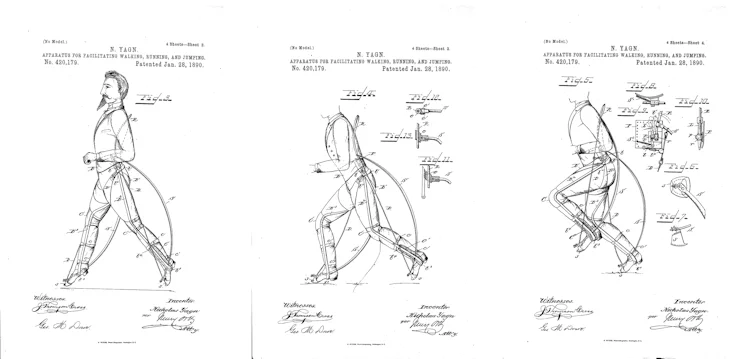
The effort to augment movement predates modern robotics. Russian inventor Nicholas Yagn patented a wearable exercising apparatus in 1890. In 1919, American inventor Leslie C. Kelley patented a steam-powered device intended to support walking. By the late 1960s, developers had built multiple powered robotic frames with electronic control systems.
Progress over the past decade has been helped by more accessible motors, sensors and control systems. The result is a growing mix of commercial and clinical applications, but the technology still has practical constraints. Batteries add weight and take up space, and devices need regular recharging. Improving battery energy density may ease those limits, though it does not remove the need to weigh power against comfort and usability.
What may change next
Most current systems rely on mechanical sensors to guide their movements. Researchers are exploring ways to control exoskeletons using signals from a wearer’s muscles or brain. That approach could help devices respond more directly to a person’s intentions, but it remains technically difficult. It may require invasive interfaces, as well as extensive calibration tailored to each user.
Materials are changing too. Researchers are developing softer exoskeletons made from textiles or rubber-like materials that could be incorporated into clothing, footwear or protective gear. These designs could offer different trade-offs from rigid frames, although the source does not establish how they perform in everyday use.
Research on walking exoskeletons in the 1960s and 1970s contributed to early humanoid bipedal robots. Interest in humanoid robotics is now helping drive work on actuators and batteries, components that also matter for wearable systems. For readers weighing the relevance of this technology, the practical question is whether a particular device has shown useful support for a particular task and user. Wider adoption will depend on evidence from real settings, along with improvements in comfort, power and control.
This article is republished from The Conversation under a Creative Commons license. Read the original article.