Starting Strength: What the Barbell Program Offers New Lifters
Starting Strength gives new lifters a simple plan built around barbell practice and gradual weight increases, but its gains and recovery demands have limits.
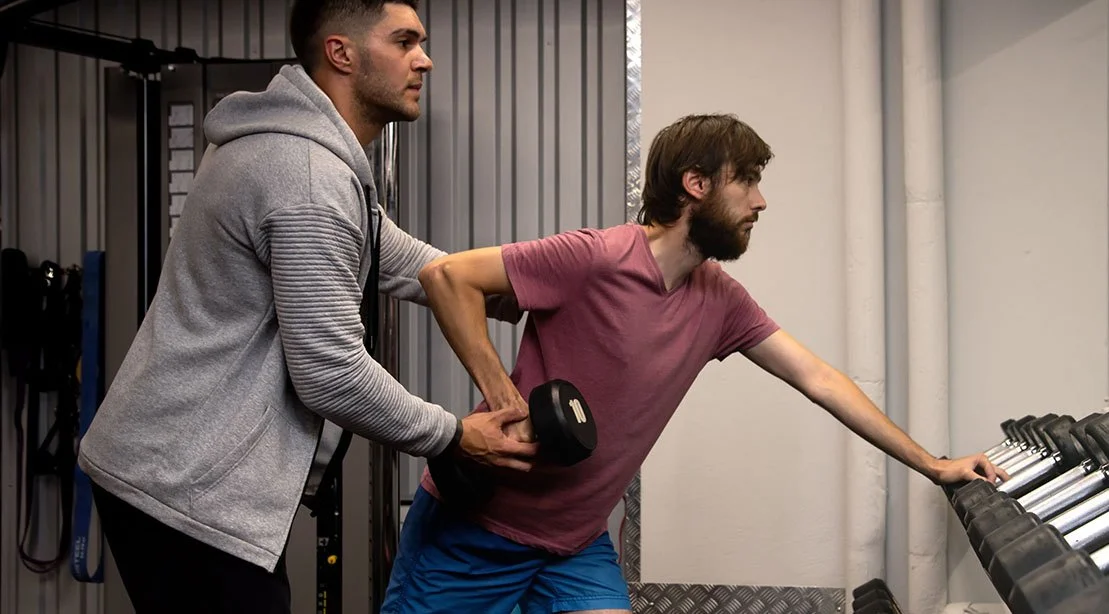
Starting Strength’s appeal is its clear structure: practice a few barbell lifts, recover between sessions, and add a small amount of weight when you’re ready. For people new to barbell training, that can make strength work easier to follow and give them regular practice with basic movements.
The program also has limits. Adding weight every workout works only while a lifter can recover and adapt at that pace. As loads rise, progress tends to slow, and a different plan may be needed. Starting Strength is best understood as a focused method for building strength, especially early in a lifting career, rather than a template designed to fit every goal or preference.
A simple progression for newer lifters
Strength coach and former competitive powerlifter Mark Rippetoe developed Starting Strength after years of coaching at the Wichita Falls Athletic Club in Texas, beginning in the 1980s. His approach is set out in Starting Strength: Basic Barbell Training. The name points to its main audience: people building a foundation with barbell lifts.
The central idea is to train hard enough to prompt an adaptation, recover, and return able to do a little more. Newer lifters often can make progress with a relatively modest amount of training. The program uses that opportunity through novice linear progression: increase the load in small steps from one workout to the next, as long as technique and recovery allow.
That doesn’t mean progress can continue at the same rate indefinitely. The method is built around the period when a lifter can adapt between sessions. When that stops happening, repeating the same increase may no longer work. Smaller plates—such as 1.25- and 2.5-pound plates—help make the early increases gradual, but they can’t remove the program’s eventual limits.
The main lifts and their technique
Starting Strength prioritizes compound lifts that use many muscles through a broad range of motion. Its core exercises are the squat, bench press, overhead press, deadlift, and power clean. Rippetoe gives detailed guidance on setup and movement, with a particular focus on bar position and how the lifter’s body moves around it.
For the squat, he favors a low-bar position and a depth where the hip crease passes below the top of the knee. The bar should remain over the middle of the foot, and the knees should move outward during the lift. These are features of his coaching approach, not requirements every lifter must follow to become stronger.
His deadlift setup also places the bar over the midfoot, close to the shins, with the shoulders slightly ahead of the bar. Moving the knees outward helps engage the hips during the pull. He also describes holding the bar near the base of the fingers rather than deep in the palm, which he says can reduce callus formation.
For the overhead press, Rippetoe cues a shrug at the top to position the shoulder blades to support the bar overhead. He considers some wrist extension normal during the lift. For the bench press, his suggested grip is about 22 to 28 inches between the index fingers, with the forearms vertical. He places the bar toward the heel of the palm and recommends keeping the fingers and thumb around it.
The power clean is an explosive lift that enters the program later. Despite its speed, it’s performed toward the end of the workout in this approach, which prioritizes strength training over power as the main focus.
How the sessions are structured
The basic plan uses three working sets of five repetitions on the main lifts. The deadlift is the exception, with one working set of five. Before those sets, lifters build up to the working weight through lighter ramp-up sets. The aim is to prepare for heavier work without adding unnecessary fatigue.
Rest periods should leave enough capacity to maintain technique and make a strong effort on the next set. Rippetoe suggests about two minutes for beginners and three to five minutes for more experienced lifters. The load increase comes after the working sets, provided the lifter completed them successfully and is ready to progress.
The initial schedule alternates two sessions across three nonconsecutive training days each week:
| Workout A | Workout B |
|---|---|
| Back squat: 3 sets of 5 | Back squat: 3 sets of 5 |
| Overhead press: 3 sets of 5 | Bench press: 3 sets of 5 |
| Deadlift: 1 set of 5 | Deadlift: 1 set of 5 |
A lifter might do A, B, A in the first week, then B, A, B in the next. This means squatting at every session, alternating between the two presses, and deadlifting each time. The arrangement gives beginners repeated practice while keeping the number of exercises low.
Rippetoe suggests running this initial format for three weeks. The source also describes continuing until the same weight is missed across multiple sessions despite adequate sleep, food, and rest, or until progress stalls. Frequent heavy squatting and pulling can make recovery difficult as the weights rise, so a slowdown may signal that the initial schedule has reached its useful limit.
How the plan changes over time
As the lifter advances, the program alternates deadlifts with power cleans and adds selected assistance work. Squatting remains in every session, while the presses and pulling exercises rotate. A sample two-week sequence looks like this:
| Week | Monday | Wednesday | Friday |
|---|---|---|---|
| 1 | Squat, bench press, back extensions, chin-ups | Squat, overhead press, deadlift | Repeat Monday |
| 2 | Squat, press, power clean | Squat, bench press, back extensions, chin-ups | Repeat Monday |
Replacing some deadlift sessions with power cleans reduces how often the program uses the heavy pull from the floor. Chin-ups and back extensions add work that isn’t covered as directly by the main lifts. Assistance exercises are intended to address a training need; the source recommends keeping them secondary, usually to one or two additions.
Assistance work and training goals
Chin-ups are one of Rippetoe’s preferred additions, providing work for the upper back, lats, and arms alongside the pressing exercises. He suggests adding weight once a lifter can do roughly 12 to 15 bodyweight repetitions. For triceps, he favors lying EZ-bar extensions that lower the bar behind the head, performed for 10 to 15 repetitions.
Other options in the program include halting deadlifts and rack pulls to train parts of the deadlift; paused squats and presses to build force from a still position; and Romanian or stiff-legged deadlifts, good mornings, back extensions, and glute-ham raises for the muscles at the back of the body. Dips, Pendlay rows, incline bench presses, and push presses are also mentioned.
The source gives specific loading suggestions for several of these movements: halting deadlifts at about 70 to 85 percent of deadlift one-repetition maximum for five to eight repetitions; paused squats and presses at 50 to 60 percent for sets of five; Romanian and stiff-legged deadlifts at 65 to 75 percent for five to 10 repetitions; and good mornings at no more than 35 percent of squat one-repetition maximum for eight to 10 repetitions. These figures are part of the program’s guidance, not a substitute for choosing loads suited to an individual’s ability and circumstances.
The larger point is that extra exercises should serve a purpose. Adding movements for variety alone can increase the work a lifter needs to recover from, without necessarily addressing a gap in the plan.
Who may find it useful—and where it falls short
Starting Strength is aimed chiefly at novice lifters, people new to barbell training, and athletes who want a basic strength foundation. Its limited exercise menu can suit people who prefer a repeatable routine and want frequent practice with the same movements.
It may be a poor fit for lifters who have already exhausted workout-to-workout progress, want a plan centered on muscle growth, or prefer more exercise variety. Its fixed movement choices may also be difficult for people with mobility or stability limitations. The program’s strong preference for particular lifts, including the low-bar squat, won’t suit every body or training context.
For a beginner, lifting more can also bring muscle growth, but the program’s primary aim is strength. Someone whose main goal is building muscle may prefer a plan with more exercise variety and targeted training volume. The right fit depends on what someone wants from training, what movements they can perform comfortably, and how well they recover.
A useful start, with an endpoint
The program’s strengths—simplicity, frequent practice, and a clear way to progress—come from its narrow focus. Three main exercises per session can provide a substantial training stimulus without a large collection of extra work. That clarity may help a new lifter spend more attention on learning the movements and less on changing routines repeatedly.
But the same structure creates its main drawbacks. Squatting three times a week can become demanding as loads increase, and adding weight every workout has a finite run. The source estimates that this phase may last three to nine months, though a person’s progress will vary. Eventually, recovery takes longer and progress calls for more individualized planning.
My read is that Starting Strength remains a coherent way to introduce barbell training when its lifts, schedule, and strength focus match the lifter. Its real value lies in giving beginners a clear structure and repeated practice. A plateau isn’t proof the method has failed; it’s a cue that the lifter’s needs have changed and the next plan should account for that.