Five Chest and Triceps Exercises to Try When Dips Hurt Your Shoulders
Dips can strain some shoulders because of their deep bottom position. These five alternatives train the chest and triceps with more controllable movement.
Why dips can bother your shoulders
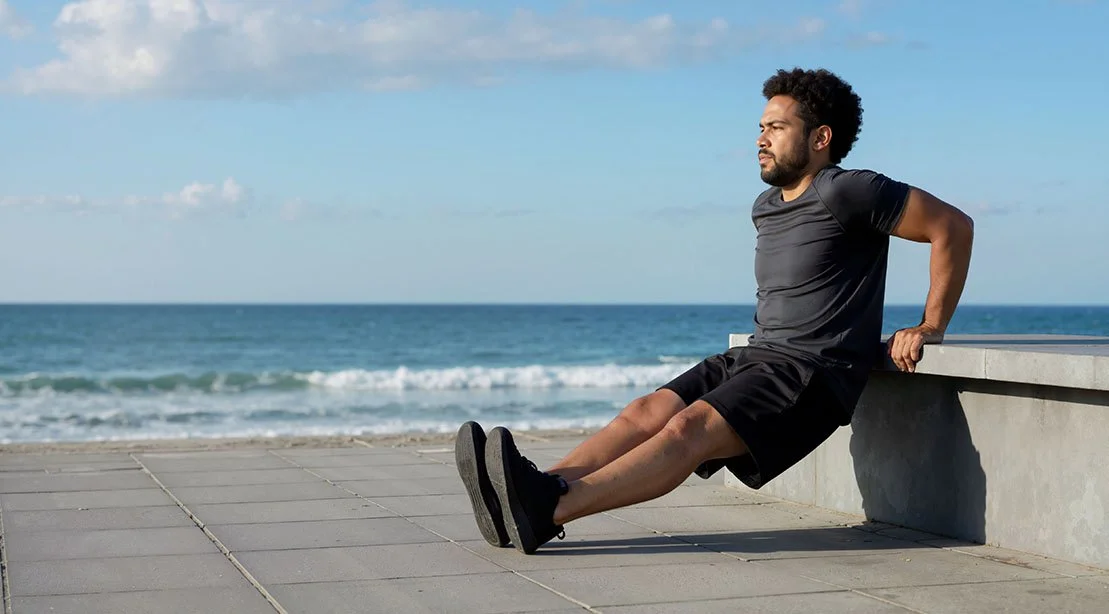
Dips can train the chest and triceps together, but the deep bottom position asks the shoulder to move into extension, with the upper arm traveling behind the torso. Some people tolerate that range well; others find it uncomfortable. The lower the descent, the more shoulder mobility and control the position may require.
Before switching exercises, consider whether depth, speed, body position or added weight is affecting your comfort. Small adjustments may make the movement more manageable, though pain that persists or worsens deserves attention from a qualified health professional. An exercise substitution is not a way to diagnose what is causing shoulder symptoms.
Four factors to review
Depth
Your upper arms don’t have to drop below parallel for a dip to count. Lower only as far as you can control comfortably. That point can differ between people and may vary from session to session. A slower descent can help you notice where discomfort begins; there’s no need to push through it to reach a particular depth.
Control
Dropping quickly and rebounding from the bottom can make it harder to maintain a steady shoulder and torso position. Keep tension through the movement, pause at a comfortable depth without relaxing into the bottom, and press back up with control. If a pause feels uncomfortable, reduce the range or try an assisted variation.
Body and elbow position
A slight forward lean tends to involve the chest more, while a more upright torso places greater emphasis on the triceps. Bar spacing also affects how your arms move. Forcing an extreme lean, holding the torso rigidly upright or flaring the elbows far out may not suit every shoulder. Start with a modest lean, let the elbows bend naturally and keep your torso position steady.
Added weight
Extra load can make a dip harder to control. Build consistency with bodyweight repetitions first; pauses and a slower lowering phase can increase the challenge without a weight belt. The source recommends waiting until you can perform 12 controlled repetitions before adding load. If weight changes your depth, shoulder position or control, it may be more than you can manage comfortably.
What to look for in an alternative
A useful substitute keeps some of the chest-and-triceps work while changing the shoulder demands. Floor presses and push-up variations, for example, can limit how far the upper arms travel behind the body. The best fit depends on whether you want more chest work, more direct triceps work, or a pressing exercise that involves both.
Range of motion matters, too. A floor press has a clear stopping point when the upper arms reach the floor, making the movement easier to limit. More range isn’t automatically better if you can’t control it comfortably.
Five alternatives to consider
Neutral-grip dumbbell floor press
This press is a practical option if the bottom of a dip is uncomfortable. The floor stops the upper arms from traveling far behind the torso, while dumbbells let each arm move independently. Lie on your back with knees bent and feet flat. Hold the weights with palms facing each other, lower until your upper arms touch the floor, pause, then press. Avoid bouncing your elbows off the ground.
Source workout guide: 3–4 sets of 6–12 repetitions.
Diamond push-up
Bringing your hands close together shifts more of the effort toward the triceps while still challenging the chest. Your upper arms don’t move as far behind you as they do in a dip, and keeping your trunk braced adds a stability demand. Place your hands close together beneath your chest, brace your abdomen and glutes, and keep your elbows near your torso. A weight vest or resistance band can increase difficulty, though body position should remain controlled.
Source workout guide: 3–4 sets of 8–15 repetitions.
Jackhammer pressdown
This cable exercise emphasizes the triceps without requiring you to support your bodyweight or descend into a deep dip position. The forward lean also gives the lower chest some involvement. Set the cable attachment around upper-chest height, lean forward and find a stable position. Keep your upper arms still as you press so your shoulders don’t roll forward during the return.
Source workout guide: 3–4 sets of 10–15 repetitions.
Dumbbell squeeze press
Also called a crush press, this movement uses inward pressure between the dumbbells to increase the challenge to the chest. The elbows stay relatively tucked, which also brings in the triceps, without requiring deep shoulder extension. Press the weights together throughout the set and maintain that pressure as you lower and raise them.
Source workout guide: 3–4 sets of 8–15 repetitions.
Hip-extension floor press
This variation adds a glute bridge to a floor press, creating a slight decline angle that resembles one feature of dip pressing. The floor still provides a stopping point for the upper arms. Hold your hips up as you press, keep them from dropping between repetitions, and bring your upper arms to the floor at the start of each repetition. The position also asks the glutes and core to help stabilize your body.
Source workout guide: 3–4 sets of 12–15 repetitions.
Choosing what fits
Dips are one way to train the chest and triceps, but discomfort is a reason to reconsider the movement, its range or its load. These alternatives let you keep working those muscles while changing the demands on your shoulders. Choose based on the movement you can perform with control and comfort, and discuss ongoing or worsening pain with a doctor or physiotherapist. A suitable substitute can remain part of your training if it continues to feel like a better fit.