Barbell Grip Guide: Hand Positions for Presses and Squats
Hand placement can affect comfort, stability and lifting mechanics. Learn how to choose a barbell grip for bench presses, overhead presses and squats.
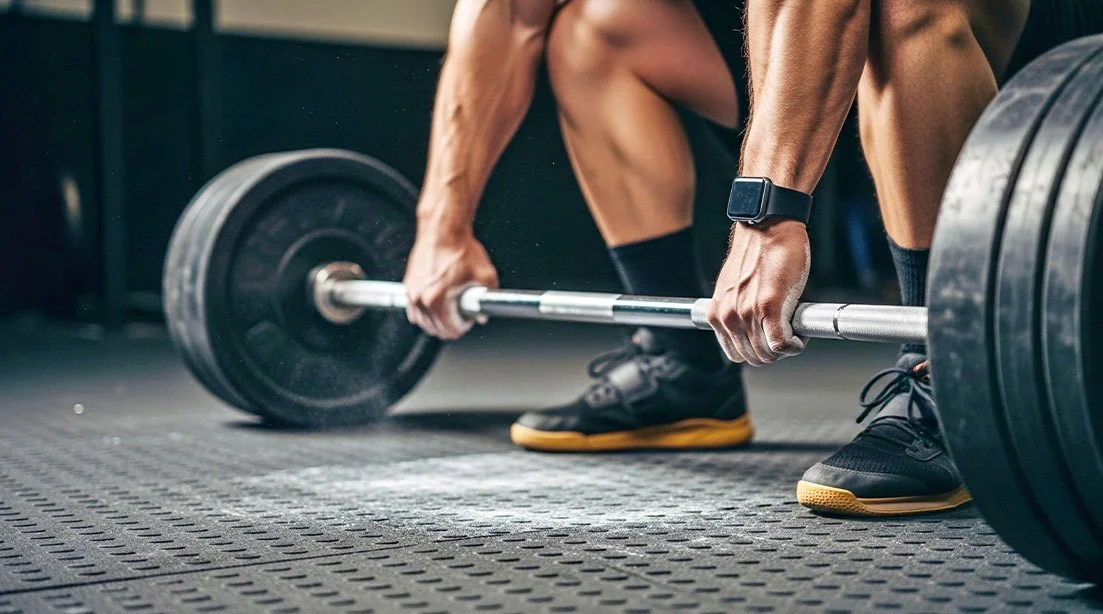
Hand placement can shape how a barbell press or squat feels and moves. It affects wrist alignment, elbow position, shoulder comfort and how securely you control the bar. A useful grip supports the lift without forcing your joints into an uncomfortable position.
There isn’t one grip that suits every lifter. Arm length, shoulder and wrist mobility, and the purpose of a workout all matter. The goal is to find a hand position that feels stable and comfortable while letting you perform the intended range of motion.
Bench press: balance alignment and comfort
For the barbell bench press, place the bar toward the heel of your palm. This helps keep it above your forearm and limits how far your wrist bends backward. Think of your hand, wrist and forearm as one supported line.
A useful starting point for grip width is to wrap your pinky around the bar’s ring. At the bottom of the repetition, your forearms should be close to vertical. From there, adjust based on comfort and the movement you want.
A wider grip shortens the bar’s travel and may place more emphasis on the chest, but it also moves the upper arms farther out from the body. Some lifters find that position comfortable; others may feel more shoulder strain. A narrower grip lengthens the range of motion and asks more of the triceps, with the elbows closer to the torso. Neither width is universally better.
Wrapping your thumb around the bar gives you a more secure hold and is the usual starting choice. A thumbless grip may feel more comfortable for some people, but offers less security. Choose a width and grip that let you control the bar while maintaining comfortable wrist alignment.
Overhead press: keep the bar over the forearms
In the overhead press, the bar should rest toward the heel of the palm rather than near the fingers. This helps keep the load over the forearm. Some wrist extension is normal, so the aim isn’t to force the wrist perfectly straight; it’s to avoid letting the bar roll back so far that the position becomes uncomfortable.
A grip just outside shoulder width is a practical starting point for many lifters. With hands too far apart, the bar travels a shorter distance and leverage may suffer. With hands too close, the elbows and shoulders can feel crowded at the bottom. Viewed from the front, the forearms should be close to vertical, with the elbows slightly ahead of the bar.
A full grip, with the thumb around the bar, provides the most security. A thumbless grip may reduce wrist bend for some lifters, but it also makes the bar less secure. The better choice is the one that allows a stable start and a press without shoulder or elbow irritation.
Back squat: secure the bar without straining the wrists
Your hands don’t carry the squat’s main load, but they help secure the bar and build tension across the upper back. A thumbless grip, with the thumb alongside the fingers, can make it easier to keep the wrists in line with the forearms. That can reduce the tendency for the hands to bend back beneath the bar.
A narrower hand position may help draw the shoulder blades together and hold the bar firmly in place. But the narrowest possible grip isn’t the goal. Limited shoulder mobility can make a close grip uncomfortable, putting strain on the wrists, elbows or shoulders. Widening your hands slightly may give you room to align your wrists while keeping your upper back tight.
Use a width that lets you keep the bar secure, your upper back engaged and your elbows comfortable. If your wrists or the insides of your elbows are sore before the squat begins, a small increase in grip width may help.
Front squat: choose a way to support the bar
In a front squat, the bar should rest securely across the front of the shoulders, while the hands help support it. Several setups can achieve that, and the right one depends partly on your mobility and comfort.
- Clean grip: Fingers go under the bar and the elbows stay high. This traditional front rack can be difficult if the wrists or shoulders lack mobility, or if the lats or triceps feel tight.
- Cross-arm grip: Cross your arms and place your hands on top of the bar. This requires less wrist and shoulder mobility, though it provides less bar security.
- Strap-assisted grip: Loop lifting straps around the bar and hold their ends. This can help you keep your elbows high without forcing your wrists into an uncomfortable position, and may offer more control than the cross-arm setup.
The best option keeps the bar stable, your elbows high and your torso upright without unnecessary discomfort. There’s no need to force a single setup if another lets you squat comfortably and maintain control.
When to reconsider your grip
Look at how the whole lift feels, rather than judging a grip by hand position alone. Your wrists, elbows and shoulders should feel reasonably well aligned. Pain or irritation is a reason to reassess the width or setup; for presses, you can also consider whether a full or thumbless grip feels better while keeping the bar secure.
Check that your grip lets you maintain the movement’s intended range and technique. If it cuts the range short or pushes you into a position you can’t control, it may not suit you. A grip that supports steadiness and strength without adding discomfort is a better fit.
Make small adjustments and pay attention to their effect across the full repetition. If discomfort persists or you’re unsure how to adapt a lift, a qualified coach or health professional can help you consider your options. The aim is a hand position that supports the movement, not one you have to fight through.