Can You Target Upper or Lower Abs? What Exercise and Research Show
The rectus abdominis works as a unit, though movement and technique may shift regional emphasis. Evidence is mixed, and fat loss can’t be targeted with ab exercises.
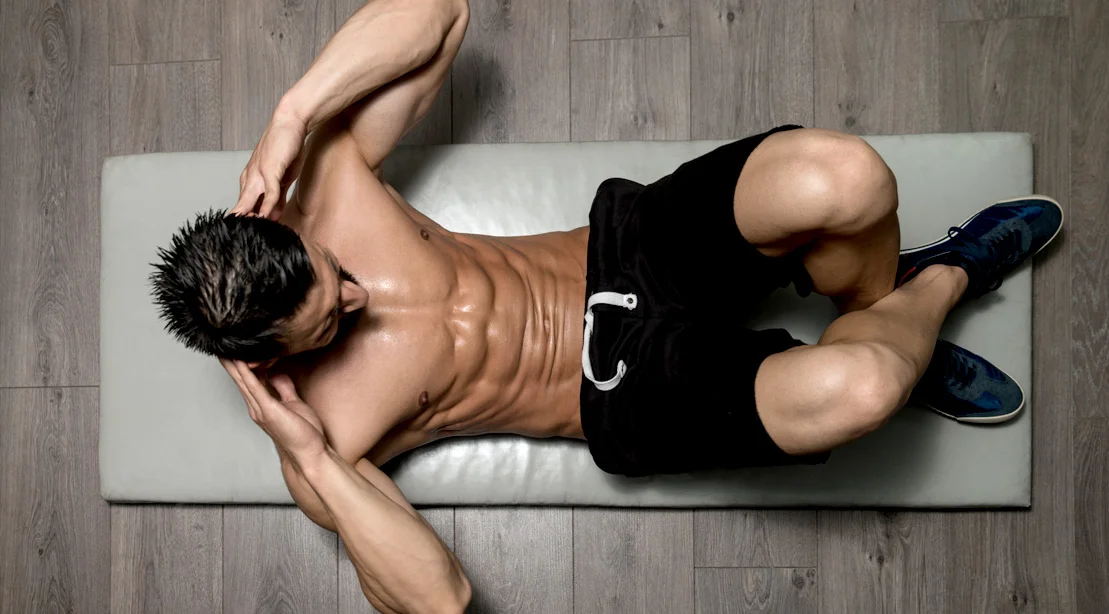
Exercises can change how the rectus abdominis is challenged, but they don’t switch its upper or lower regions on and off independently. That distinction helps make sense of the familiar advice to use crunches for “upper abs” and leg raises for “lower abs”: exercise choice may shift emphasis, while complete isolation isn’t possible.
Gareth Sapstead, author of Ultimate Abs: The Definitive Guide to Developing a Chiseled Six-Pack, describes the rectus abdominis as one paired muscle running from the pelvis toward the ribs and sternum. Bands of connective tissue crossing it create the segmented appearance people call a six-pack. Those visible sections can make it seem as though separate muscles sit above and below the navel, but appearance doesn’t tell the whole anatomical story.
There’s a second oversimplification to avoid. Learning that the rectus abdominis is one muscle doesn’t mean every abdominal exercise works it in exactly the same way. Sapstead prefers “bias” to “isolate”: movements and their execution may place greater demand on different regions, even though the muscle continues to function as a unit.
What the abdominal muscle does
The rectus abdominis helps flex the trunk, bringing the rib cage and pelvis closer together. In a crunch, the rib cage moves toward the pelvis. In a reverse crunch performed with pelvic movement, the pelvis curls toward the rib cage. The direction changes, but both movements involve trunk flexion and the same muscle.
The muscle also helps resist spinal extension. During an ab-wheel rollout, for example, extending the arms increases the force pulling the lower back into an arch. The abdominal muscles work to resist that movement. They also help control the positions of the ribs and pelvis. Contracting the rectus abdominis can contribute to posterior pelvic tilt, or tucking the pelvis under.
These roles matter beyond focused abdominal exercises. The trunk helps transfer force between the upper and lower body during activities such as lifting, carrying and throwing. A useful core program therefore includes more than repeated crunch variations.
Why pelvic movement matters in leg raises
A leg raise can involve substantial hip movement without much movement of the pelvis. Raising the legs by flexing at the hips isn’t the same as curling the pelvis toward the ribs. That difference can change how much the rectus abdominis contributes to the movement.
For an exercise with more of the emphasis people often associate with the lower abdomen, Sapstead focuses on pelvic control. His cue is to imagine bringing the belt buckle toward the ribs. In a hanging knee raise, that means adding a deliberate pelvic curl instead of simply lifting the knees higher.
This adjustment doesn’t switch off the upper region of the rectus abdominis or make the lower region an independent muscle. It changes the movement and may shift the relative demand. How well someone performs the movement also matters: lifting the feet high isn’t, by itself, evidence that the pelvis is curling.
What studies have found
Research on regional abdominal activity is mixed, which supports using “bias” as a qualified description rather than promising isolation. The available studies don’t establish a simple rule that one class of exercise trains the upper region and another trains the lower region.
One study compared a curl-up with a movement involving posterior pelvic tilt. It reported greater upper rectus activity during correctly performed curl-ups. Among participants with higher overall abdominal activity, the pelvic-tilt movement placed greater demand on the lower region than the curl-up did. The differences weren’t apparent in participants who performed the movements incorrectly, making technique an important part of interpreting the finding.
A study of 25 healthy participants compared five abdominal exercises and found the reverse curl produced the greatest lower-region engagement among those exercises. But this result doesn’t establish that the lower area can be trained on its own, or that the same result applies to every person or exercise variation.
Other findings don’t show a clear separation. A pilot study testing six exercises, including curl-ups, leg lowering, rollouts and reverse curl-ups, found no significant differences in upper and lower abdominal activation across the exercises. Another study of several exercises also reported no significant difference between the two regions.
Together, these results leave room for regional emphasis while giving little support to claims of regional isolation. Differences in exercise choice, body position, movement direction and technique may affect relative muscle activity. The evidence is mixed, though, and it doesn’t settle on one exercise as a reliable way to isolate a particular section.
Training muscle and changing body fat are separate goals
Questions about “lower abs” can mean two different things: how to train the muscle, or how to make the area look more defined. An abdominal exercise can strengthen and develop the muscle underneath, but it can’t selectively remove fat over that area. Reverse crunches don’t spot-reduce lower-abdominal fat, Sapstead says.
This distinction doesn’t make direct abdominal training pointless. Like other muscles, the rectus abdominis can become stronger and more developed with progressive training. But building the muscle and changing how visible it is are separate matters. Videos and products promising a special movement for fat loss in one specific area don’t change that.
The popularity of lower-ab exercises online reflects how easily these two goals get mixed together. Keeping them separate makes it easier to judge what an exercise can do: it can challenge muscle and movement, but it can’t choose where body fat changes.
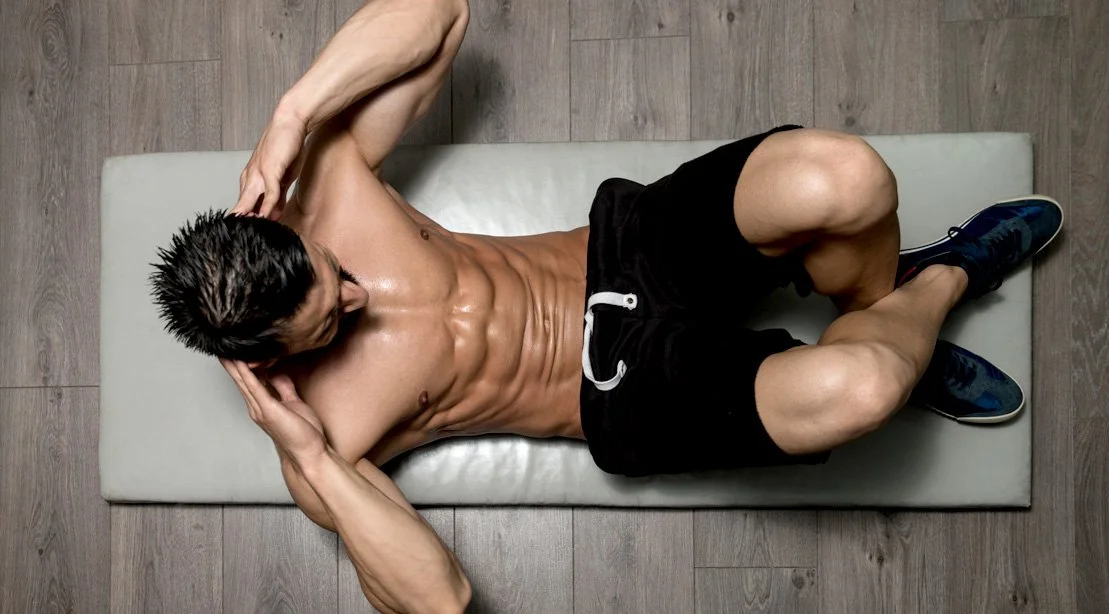
Train the trunk through different movements
A balanced approach can cover several jobs the trunk performs. Exercise options below are examples from the source article, not a requirement to use every movement. People can choose variations that suit their experience and equipment.
Trunk flexion: These movements bring the rib cage toward the pelvis. Options include a tall-kneeling cable crunch, a weighted stability-ball crunch and a weighted crunch. Bodyweight versions can be useful; added resistance offers another way to make the movement more challenging while maintaining control.
Pelvic control: These movements emphasize controlling the pelvis, including a deliberate posterior tilt, rather than simply flexing at the hips. Options include a reverse crunch, a hanging knee raise with a pelvic curl and a stability-ball reverse crunch. The belt-buckle cue can help keep attention on the pelvis. How high the feet travel matters less than whether the pelvis moves with control.
Resisting extension: Anti-extension exercises challenge the trunk to prevent the lower back from arching excessively. Examples include an ab-wheel rollout, a TRX body saw and a dead bug. In a rollout, extending farther lengthens the lever and increases the challenge.
Resisting rotation: A Pallof press, renegade row or half-kneeling cable press challenges the trunk to resist unwanted twisting while the arms or legs move. This type of control is useful in movements that require transferring force through the body.
Resisting side bending: A suitcase carry, chaos suitcase carry or side plank challenges the trunk to stay upright against a sideways pull. In a one-sided carry, the load encourages the torso to bend toward it, and the opposite side of the trunk works to resist.
Progress the challenge, not the search for a perfect exercise
Sapstead’s advice for muscle development is to apply progressive overload: increase the challenge over time. That can mean adding resistance or repetitions, using a greater range of motion, lengthening the lever or choosing a harder variation. For example, holding the arms overhead during a crunch or extending farther during a rollout can increase the demand without adding weight.
These approaches also offer a steadier path than constantly switching exercises in search of a supposedly perfect lower-ab movement. If a variation is comfortable and controlled, progress can come from improving the movement or gradually increasing its challenge.
What the distinction changes in practice
Believing in complete upper or lower isolation is unlikely to prevent all abdominal training, but it can steer attention toward the wrong details. Someone focused on making the feet rise higher in a leg raise may rely more on hip movement while giving less attention to pelvic control. For the lower-region emphasis people often seek, Sapstead suggests paying closer attention to producing and controlling posterior pelvic tilt.
A narrow focus can also leave out other trunk functions. Flexion is only one part of core training; resisting extension, rotation and side bending matters too. Rollouts, Pallof presses, dead bugs and suitcase carries are examples of ways to challenge those roles.
The practical takeaway is to think in terms of movements and emphasis. The rectus abdominis functions as one paired muscle, and exercise choice doesn’t isolate one section while the other switches off. Technique and movement direction may shift regional demand, but research findings are mixed. Train the trunk through varied movements, progress exercises over time, and treat muscle development and fat loss as separate questions.