Glute Training: Exercises, Weekly Sets and Common Myths
A balanced glute program trains hip extension, abduction and stability, with exercises at different muscle lengths and room for recovery.
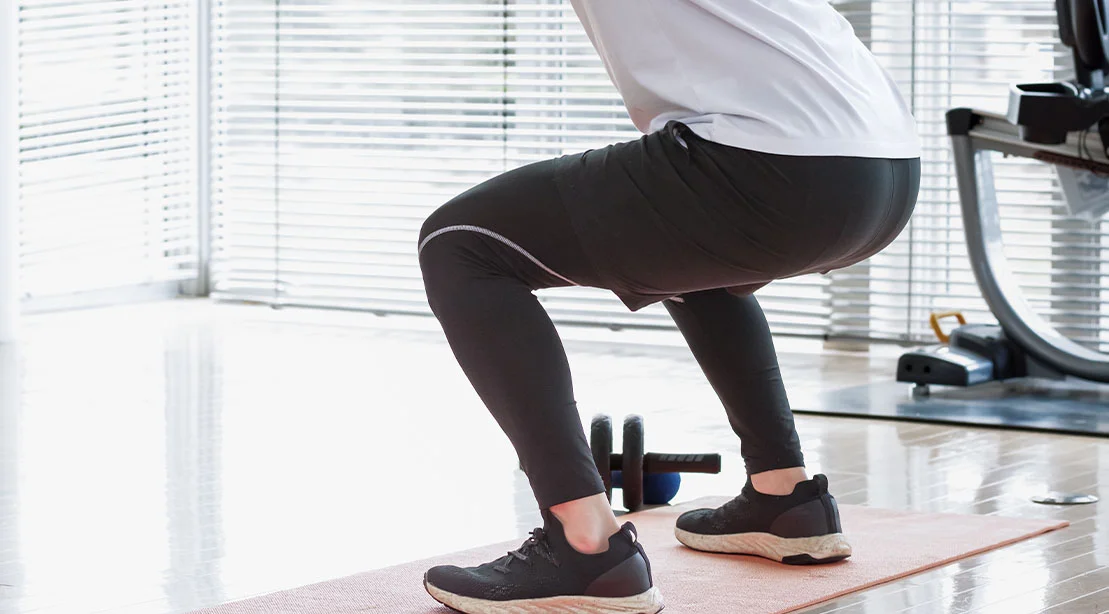
Strong glutes support more than the look of your backside. They help extend and rotate the hip, stabilize the pelvis and produce force for movements such as running, jumping, lifting and changing direction. A well-rounded program therefore needs more than a favorite lift: it should account for the three glute muscles, their different functions and the positions in which exercises challenge them.
The gluteus maximus is the largest and most visible of the group, but the gluteus medius and minimus also contribute to hip control. Compound lifts can train the glutes alongside other lower-body muscles; more targeted exercises can add work for hip abduction and rotation. Exercises that load the glutes with the hip flexed and those that challenge them near full hip extension offer different training stimuli.
That variety matters more than choosing sides in a squat-versus-hip-thrust debate. Individual anatomy, technique and comfort also shape which movements work well for a person. The practical aim is a manageable mix of exercises that can be performed with control and progressed over time.
Watch the glute training video
Three muscles, several jobs
The gluteus maximus is the largest of the three muscles and sits closest to the skin. Its main actions include extending and externally rotating the hip. Depending on hip position, some fibers can also assist with adduction or abduction. It contributes substantially to the shape of the buttocks, but its role in producing force is just as relevant.
The gluteus medius lies on the outer side of the pelvis, partly beneath the maximus. It primarily moves the thigh away from the body’s midline, a movement called hip abduction, and helps keep the pelvis steady. Its fibers don’t all act in the same way: the front fibers can assist with internal rotation, while the back fibers can contribute to external rotation.
The smaller, deeper gluteus minimus also helps abduct and internally rotate the hip. It works with the medius to help control the thigh and stabilize the pelvis, particularly when one foot is off the ground. Walking and single-leg movements are everyday examples of situations where this control matters.
Let anatomy guide exercise choices
The hip is a ball-and-socket joint, but its structure varies. Differences in socket depth and direction, the angle of the femoral neck and the rotation of the thigh bone can affect which stances and ranges of motion feel natural. Mobility, limb length and strength matter, too.
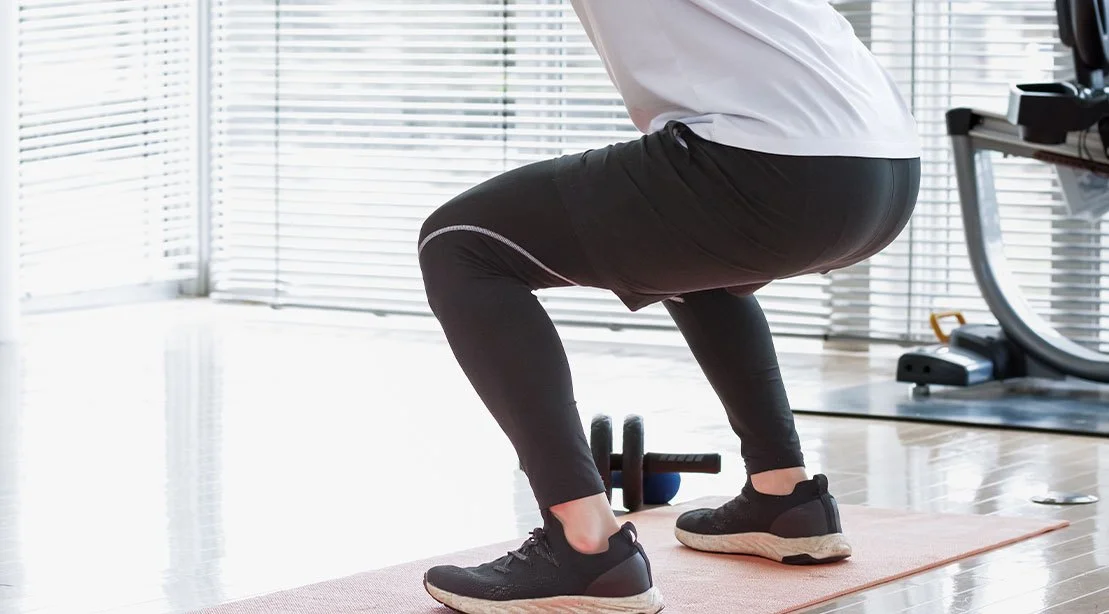
That’s one reason there isn’t a single ideal squat stance for everyone. One person may be comfortable squatting with a narrower stance and toes forward; another may find a wider stance with the toes turned out works better. Adjusting stance, foot angle or depth can help someone find a controlled position that loads the glutes comfortably.
A comfortable range isn’t a reason to force a deeper position or imitate another lifter’s form. The useful test is whether the movement can be performed with control and without pain. If an exercise causes persistent pain or feels difficult to adapt, a qualified clinician can help assess what’s going on.
Why glute strength matters
The glutes contribute to lower-body strength in both training and daily activity. Hip extension helps power actions such as standing up, climbing stairs, sprinting and lifting. Strength work can build the capacity to produce force; faster movements, when appropriate to a person’s experience and ability, train the body to produce force quickly.
The medius and minimus help control the pelvis and thigh in single-leg tasks, including walking, running, step-ups and single-leg deadlifts. Poor balance or an inward drift of the knee during a movement can have many possible causes; it isn’t, on its own, proof that someone has weak glutes. Still, exercises that challenge balance and hip control can be useful parts of a training plan.
In sport, the glutes help extend the hip during sprinting and contribute to controlling the body as it lands, cuts or changes direction. Hip rotation also links lower-body movement to actions such as swinging a bat, throwing a punch or making a golf swing. These roles make glute training relevant to performance as well as muscle development.
Claims about preventing joint problems need more care. The hips, knees and lower back work together, and movement can be shared across these areas. Glute training can build strength and control, but it doesn’t guarantee protection from injury or resolve pain. Ongoing symptoms are a reason to seek individual medical guidance.
Train through different ranges and functions
Squats, Romanian deadlifts and hip thrusts are compound exercises: several muscles contribute to the movement. They can form the foundation of a program, though the total load lifted doesn’t tell you exactly how much work the glutes did. Squat depth, torso angle, hip position and technique all affect how a movement is performed.
Exercises such as deep squats, Romanian deadlifts, front-foot-elevated split squats and deficit reverse lunges challenge the glutes with the hip more flexed, placing them at a longer muscle length. A controlled lowering phase can help maintain control in these positions. Use a range of motion that you can manage.
Hip thrusts, glute bridges and cable kickbacks emphasize hip extension closer to the top of the movement, when the glutes are shorter. They typically use a smaller range of hip motion than some squat or hinge variations. Both longer-length and shorter-length exercises can contribute to strength and muscle development; they offer different demands.
Hip-abduction exercises, including a machine, cable movement, lateral band walk or side-lying raise, give the medius and minimus more direct attention. Seated band internal rotation, cable external rotation and 90/90 hip rotations add work for controlling rotation at the hip. These options can complement compound lifts rather than replace them.
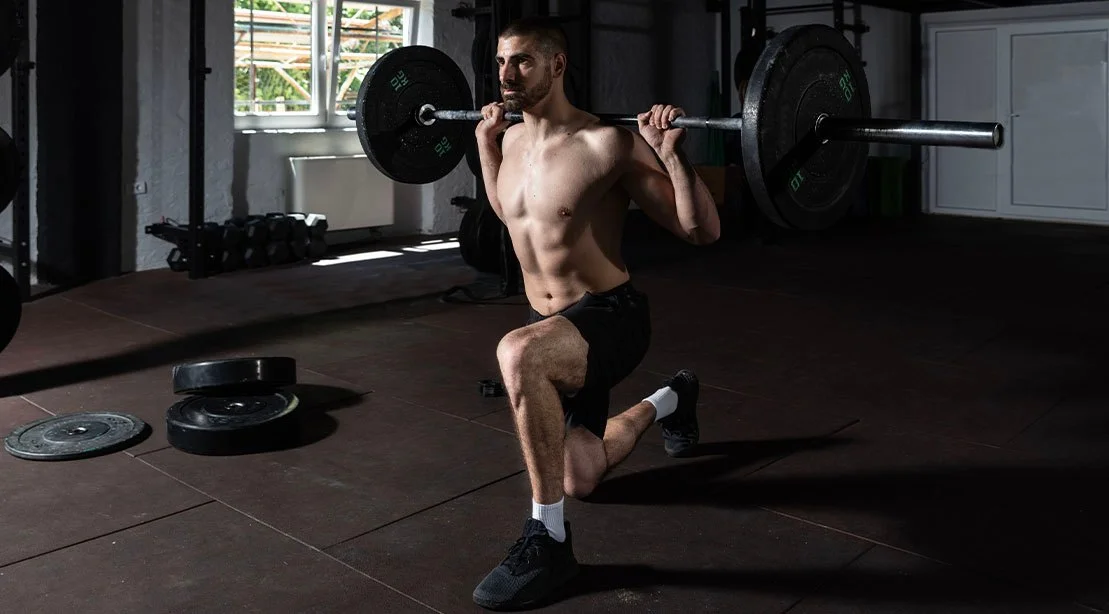
Single-leg Romanian deadlifts, step-ups and Bulgarian split squats train one side at a time. They ask the working leg to produce force while the body maintains balance and pelvic control. People can use them to build single-leg strength, while choosing a version that suits their current stability and ability.
Programming strength, size and power
A practical program doesn’t need a long list of glute exercises. It needs a combination that covers the desired training qualities without making every session unreasonably long. Compound lifts can supply much of the strength and muscle-building work; targeted abduction, rotation or single-leg exercises can fill specific gaps.
For strength, the source guide suggests sets of three to five repetitions on challenging bilateral and unilateral compound lifts. Rest for two to three minutes or longer when needed to maintain technique. Progress gradually, keeping the intended range of motion and form intact.
For muscle growth, it suggests six to 15 repetitions on compound exercises, including movements that load the glutes at different muscle lengths. Use controlled repetitions and work near the point where another repetition would compromise technique. Muscle growth can occur across a wider range of repetitions, so this range is a practical programming option rather than a fixed requirement.
For power, the guide suggests three to six repetitions of movements such as broad jumps, performed early in the session while fresh. Prioritize speed and quality, and rest for at least two minutes when needed to keep the movements explosive. Jumping and sprinting are demanding activities; select them according to experience and physical capacity.
For abduction work, it suggests 15 to 20 controlled repetitions, with progression over time. For single-leg stability and strength, it suggests six to 12 repetitions per side, increasing difficulty only as strength and balance allow. These ranges are starting points, not requirements for every person or exercise.
Weekly volume and session frequency
The guide offers a weekly set table by experience level. It treats the figures as guidelines and counts each set according to its main training purpose. A Bulgarian split squat may challenge strength, muscle growth and stability together; when using this table, the guide assigns that set to its primary category rather than counting it three times.
| Focus | Beginner | Intermediate | Advanced |
| Strength | 2 | 4 | 5 |
| Muscle or single-leg stability | 4 | 6 | 7 |
| Hip abduction | 2 | 2 | 2 |
| Power | 2 | 2 | 4 |
| Total weekly sets | 10 | 14 | 18 |
For many lifters, two or three weekly sessions provide a reasonable starting structure. Beginners can split their work across two sessions; intermediate lifters can use two or three. More experienced people focused on glute development may spread work over three sessions to keep each one manageable. Recovery, training history and the rest of a person’s program affect what is sustainable.
Common mistakes and myths
Relying only on hip thrusts and bridges leaves out exercises that challenge the glutes at longer muscle lengths, along with direct work for abduction and single-leg control. The reverse is also true: squats alone don’t cover every glute function. A mix of hip-extension movements and targeted exercises is a more complete approach.
Another common error is extending the lower back to create the appearance of a harder hip-thrust or deadlift lockout. Keeping the ribs stacked over the hips and ending the repetition when the hips reach extension can help keep the movement centered on the hip. Extra range created by arching the back isn’t necessarily more glute work.
Feeling a stronger squeeze during hip thrusts doesn’t prove they build more muscle than squats. Muscle sensation during a set and muscle growth over time are different measures. Research comparing squats with hip thrusts reports that both can build the glutes, despite differences in how the exercises are performed. Preference, comfort and fit with the rest of a program can help guide the choice. Read the research.
Some exercises or hip positions may place more emphasis on particular regions of the gluteus maximus, whose fibers have different orientations and actions. That doesn’t mean one region can be switched off while another works. Claims that a single exercise can isolate a specific upper or lower area should be treated cautiously. The related discussion of upper- and lower-ab training makes a similar point about claims of isolation.
Soreness is also a poor measure of workout quality or muscle gain. Strong soreness can follow an unfamiliar stimulus or a lot of lowering work, but it doesn’t show that a session produced more growth. Progress in training, technique and recovery offers more useful information.
Two sample sessions
These examples combine glute-focused work with exercises for other areas. Loads, sets and exercise variations can be adapted to experience and recovery. They can be used as standalone sessions or fitted into an existing routine, while accounting for the rest of the week’s training.
Full-body session with a glute focus
| Barbell back squat | 4 sets | 5–8 reps |
| Broad jump | 3 sets | 3 reps |
| Dumbbell bench press | 3 sets | 6–12 reps |
| Chin-up | 3 sets | 6–12 reps |
| Single-leg Romanian deadlift | 2 sets | 8–10 per side |
| Landmine side-to-side press | 2 sets | 6–8 per side |
| Suitcase carry | 2 sets | 40 yards per side |
Lower-body session with a glute focus
| Bulgarian split squat | 3 sets | 6–12 per side |
| Weighted calf raise | 3 sets | 15–20 reps |
| Barbell hip thrust | 3 sets | 5–8 reps |
| Lateral band walk | 3 sets | 15–20 per side |
| Leg curl variation | 2 sets | 12–15 reps |
| Rotational medicine ball throw | 2 sets | 5 per side |
The guide suggests resting two to three minutes after each superset and 90 seconds between exercises. When a set reaches the top of its repetition range with clean technique, a small increase in load is one way to progress. The full-body session contains nine glute-focused resistance sets, while the lower-body session contains 11; account for those totals when fitting them into a week or doing both.
Glute training works best as a mix: hip extension at different muscle lengths, direct work for the smaller glute muscles, and single-leg or power movements when they suit the person’s goals. Progress gradually, keep repetitions controlled and leave room for recovery. The best program is one that matches the lifter’s anatomy and experience and can be performed consistently.